
Whether the winch uses steel wire rope or synthetic rope, regular maintenance ensures optimal performance. A professional winch rope care service includes inspection, cleaning, lubrication (for steel ropes), conditioning (for synthetic ropes), tension checks, and documentation. Without routine care, winch ropes can degrade quickly, increasing the risk of equipment failure and accidents.
Winch ropes are load-bearing components. A weakened rope can snap under tension, posing serious risks to equipment and personnel. Regular inspection and preventive care reduce the likelihood of sudden failure.
Routine cleaning, lubrication, and conditioning significantly extend rope service life. Proper care reduces wear, internal friction, and environmental damage, allowing ropes to maintain their strength and flexibility longer.
Unexpected rope failure can halt operations and cause costly delays. Scheduled winch rope care ensures consistent performance and minimizes emergency replacements.
A well-maintained rope reduces strain on winch drums, fairleads, sheaves, and motors. Proper care helps maintain balanced spooling and smooth operation.
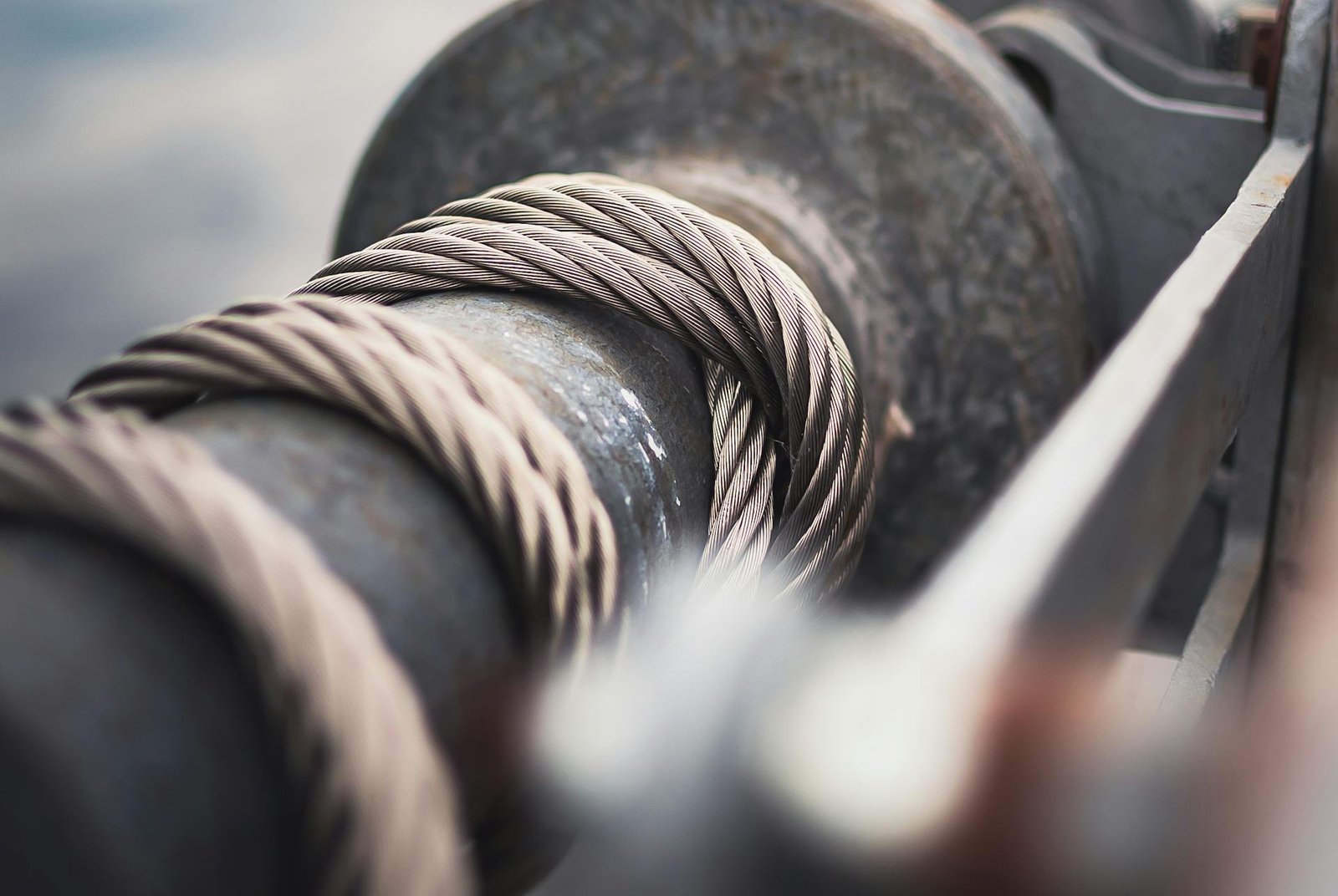
Steel wire ropes are commonly used in heavy-duty applications due to their strength and durability. However, they are prone to corrosion, internal wear, and fatigue. Steel ropes require regular lubrication and corrosion protection.
Synthetic ropes, often made from high-performance fibers, are lightweight and easier to handle than steel ropes. While they do not rust, they are sensitive to abrasion, UV exposure, dirt contamination, and heat. Synthetic rope care focuses on cleaning and protective treatments rather than lubrication.
Inspection is the foundation of rope care. Technicians examine the rope for:
Broken wires (in steel ropes)
Kinks or birdcaging
Flattened or crushed sections
Fraying or fiber damage (in synthetic ropes)
Discoloration or corrosion
Core damage
This evaluation determines whether the rope can continue in service or requires replacement.
Contaminants such as dirt, sand, salt, oil, and debris accelerate rope wear. Cleaning methods vary depending on rope type:
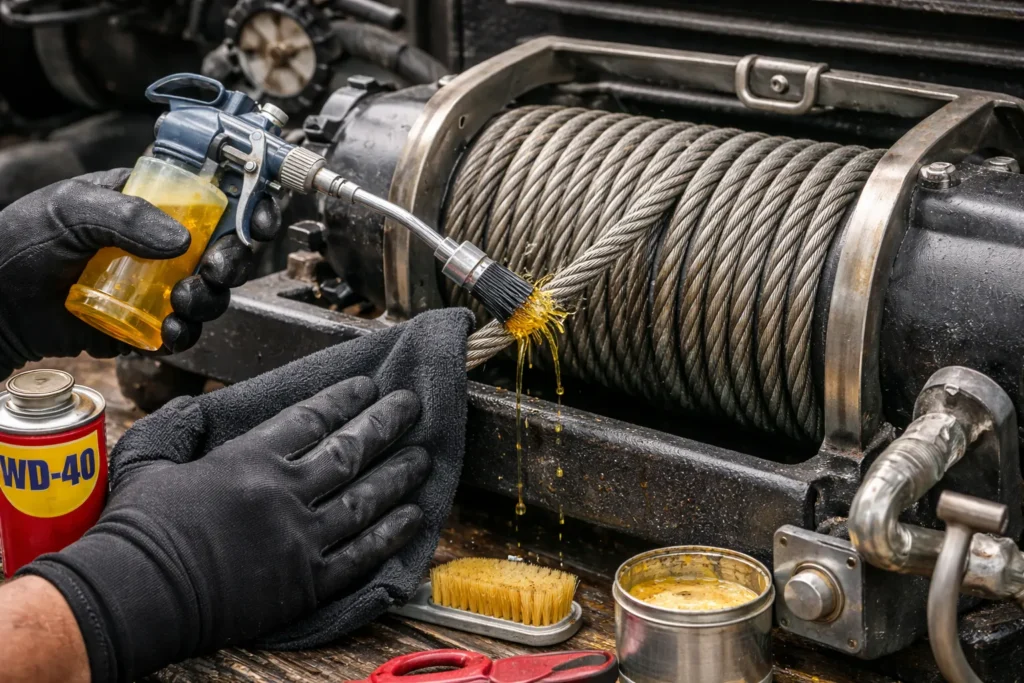
Steel ropes may be brushed to remove dirt and old grease.
Synthetic ropes may be washed with mild cleaning solutions and rinsed thoroughly.
Proper drying is essential before further treatment to prevent moisture-related damage.
Steel ropes require lubrication to reduce internal friction and prevent rust. Lubricant must penetrate the rope core, not just coat the outer surface. Proper lubrication reduces wear between strands and protects against moisture intrusion.
Over-lubrication is avoided to prevent dirt buildup and dripping.
Synthetic ropes are treated with protective coatings designed to reduce UV damage and improve abrasion resistance. Conditioning restores flexibility and helps maintain fiber integrity.
Improper spooling causes uneven wear and crushing. During service, technicians ensure that the rope is evenly wound on the drum under proper tension. Correct spooling prevents overlapping layers and extends rope life.
If the rope shows broken strands, frayed fibers, or damaged sections, immediate attention is required. Continued use without care may lead to failure.
For steel ropes, rust is a clear sign of inadequate lubrication. Corrosion weakens the rope from the inside and can spread quickly.
A rope that feels stiff may lack lubrication or be contaminated with dirt. Reduced flexibility increases stress during bending.
If the rope piles unevenly on the drum, it may indicate tension imbalance or improper installation. This can cause crushing damage over time.
Grinding or squeaking noises often signal insufficient lubrication or internal wear.
Saltwater exposure accelerates corrosion in steel ropes and degrades synthetic fibers. Frequent cleaning and protective treatment are necessary in marine settings.
Construction and mining environments expose ropes to abrasive particles. Dirt can penetrate rope strands, increasing friction and wear.
High temperatures can degrade synthetic fibers, while freezing conditions can reduce rope flexibility. Selecting appropriate protective treatments helps mitigate temperature-related damage.
Prolonged sunlight exposure weakens synthetic ropes over time. UV-resistant treatments and proper storage reduce this risk.
Winch rope care frequency depends on:
Usage intensity
Load levels
Environmental conditions
Manufacturer recommendations
Safety standards
Heavy-duty or daily-use winches may require monthly inspections and quarterly servicing. Light-duty applications may follow a semi-annual maintenance schedule. However, ropes used in critical lifting operations should be inspected before each use.
Many industries require documented inspections and maintenance. Regular service ensures compliance with safety regulations and operational standards.
Preventive maintenance costs significantly less than emergency rope replacement or equipment downtime. Extending rope life reduces overall operational expenses.
Properly maintained ropes operate smoothly, with consistent pulling strength and minimal resistance. This improves winch efficiency and reduces motor strain.
By reducing friction and uneven load distribution, rope care protects drums, gears, and related mechanical components.
Winch ropes should be stored in dry, shaded environments away from direct sunlight and chemicals. Steel ropes should be lightly lubricated before storage to prevent rust.
Sharp bends can permanently damage the rope’s structure. During handling, avoid tight radii that exceed manufacturer recommendations.
After use in muddy or sandy conditions, ropes should be cleaned promptly. Allowing contaminants to dry inside the rope increases abrasion.
Protective sleeves can reduce abrasion in high-contact areas, especially for synthetic ropes used in recovery operations.
Before servicing, ensure the winch is powered off and the rope is not under load. Personal protective equipment, such as gloves and eye protection, should always be worn. For heavy industrial systems, lockout procedures may be required to prevent accidental activation.
Safe handling prevents injuries from sharp wire ends or tension release.
Consistent winch rope care significantly enhances operational reliability. Ropes maintain their structural integrity, flexibility, and load-bearing capacity when properly maintained. Over time, this leads to smoother performance, fewer breakdowns, and safer working conditions.
Preventive maintenance also allows early detection of wear patterns, helping operators identify operational issues such as misalignment or overloading.