
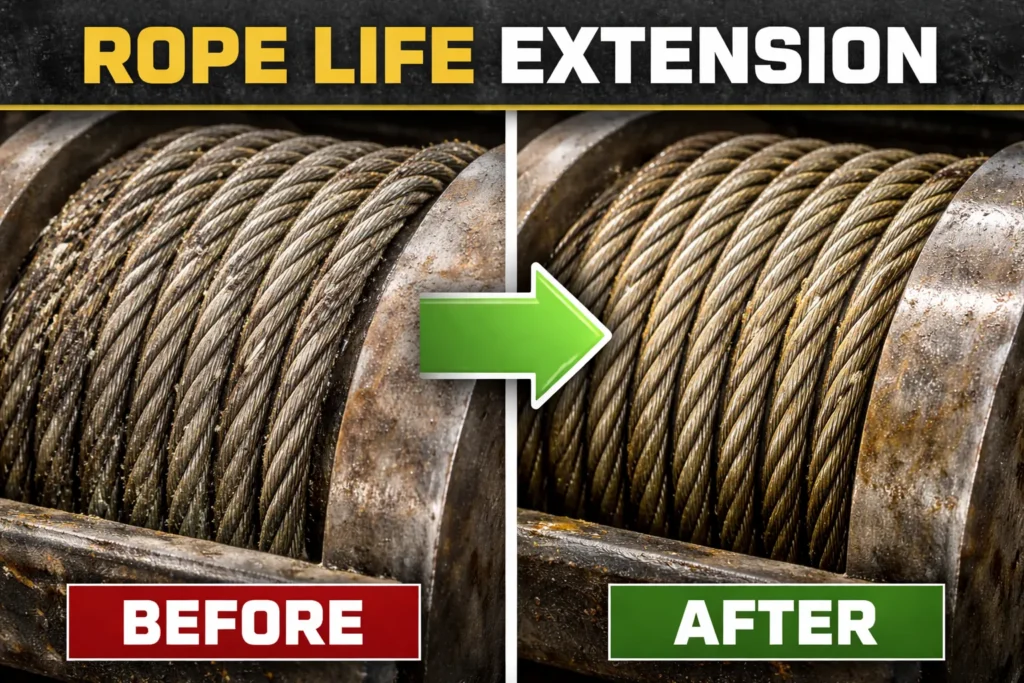
In industries where ropes are critical components, such as construction, marine, mining, oil and gas, manufacturing, and transportation, extending rope life directly impacts safety, efficiency, and cost control. A structured life extension service ensures ropes remain reliable for as long as safely possible while meeting regulatory and operational standards.
Wire and synthetic ropes can be expensive to replace, especially in heavy-duty or large-scale operations. Frequent replacements increase material costs and labor expenses. A life extension program reduces unnecessary replacement cycles and optimizes return on investment.
Replacing a rope often requires stopping equipment, scheduling labor, and conducting safety checks. By extending rope life, organizations avoid unexpected failures and reduce production interruptions.
A rope that is properly maintained retains its structural integrity longer. Life extension services focus on identifying early-stage wear and correcting issues before they escalate into dangerous failures.
Extending the usable life of ropes reduces material waste and lowers environmental impact. Fewer replacements mean reduced manufacturing demand and less disposal of used materials.
The foundation of any life extension program is a thorough inspection. This includes checking for:
Broken wires
Corrosion and rust formation
Strand distortion or birdcaging
Core damage
Abrasion and flattening
Diameter reduction
Synthetic fiber fraying or heat damage
Advanced inspection methods may also include non-destructive testing to evaluate internal conditions not visible externally.
Dirt, salt, sand, chemicals, and hardened lubricants accelerate rope wear. Cleaning removes abrasive particles that cause internal friction. For steel ropes, mechanical brushing may be used. For synthetic ropes, washing and controlled drying procedures are applied.
A clean rope allows protective treatments to penetrate effectively and function as intended.
For steel wire ropes, lubrication is essential for life extension. Proper lubrication:
Reduces internal friction between strands
Prevents moisture intrusion
Protects against corrosion
Maintains flexibility
High-pressure lubrication systems can force lubricant deep into the rope core, ensuring comprehensive protection.
Synthetic ropes require conditioning rather than lubrication. Treatments may include UV-resistant coatings and abrasion-resistant protectants. These applications restore flexibility and reduce fiber degradation caused by environmental exposure.
Rope life extension services often include evaluation of operational practices. Overloading, improper spooling, misalignment, and sharp bending radii can significantly reduce rope life. Identifying and correcting these issues prevents premature wear.
As ropes bend over sheaves and drums, internal wires or fibers rub against each other. Without proper lubrication or conditioning, friction increases, leading to fatigue and wire breakage.
Moisture and chemicals penetrate rope strands, causing internal rust in steel ropes. Corrosion weakens load-bearing capacity and may not be visible until significant damage has occurred.
Surface contact with rough edges, drums, or debris leads to external wear. Abrasion gradually reduces rope diameter and structural strength.
Continuous bending under load causes metal fatigue in steel ropes and fiber stress in synthetic ropes. Monitoring bending cycles helps determine appropriate maintenance intervals.
Saltwater, UV radiation, extreme temperatures, and chemical exposure all accelerate rope degradation. Protective treatments mitigate environmental damage.
Well-maintained ropes perform consistently under load. Reduced wear and internal damage result in smoother operation and predictable performance.
Routine inspections identify minor issues before they become major failures. Early intervention prevents catastrophic rope breakage.
Data collected during life extension services helps create accurate maintenance schedules tailored to specific operating conditions.
Properly maintained ropes reduce strain on related components such as drums, pulleys, and drive motors. Lower friction improves energy efficiency and reduces mechanical stress.
Cranes and hoists rely heavily on steel wire ropes. Life extension services maintain lifting capacity and prevent costly project delays caused by rope failure.
Marine environments accelerate corrosion due to salt exposure. Regular protective treatment significantly slows rust development and preserves structural integrity.
Mining ropes operate in abrasive, dusty conditions. Cleaning and lubrication reduce wear caused by grit and heavy loads.
Manufacturing facilities use ropes in conveyors, hoists, and lifting systems. Predictive maintenance supports continuous production schedules.
Accurate documentation of inspections, lubrication schedules, and observed wear patterns is critical. Maintenance logs help track rope condition over time and guide replacement planning.
Analyzing rope wear trends helps identify operational inefficiencies. If certain ropes deteriorate faster than expected, adjustments in usage or environment may be necessary.
Many industries require documented rope inspections and maintenance to meet safety regulations. A structured life extension program ensures compliance with these standards.
Incorrect installation can reduce rope life from the start. Ensuring correct tension, alignment, and spooling prevents uneven wear.
Avoiding shock loads and overloading is essential. Gradual load application reduces stress on rope fibers and wires.
Frequent inspections, especially in high-demand environments, ensure early detection of wear and corrosion.
When not in use, ropes should be stored in dry, shaded environments. Steel ropes should be lightly lubricated before storage to prevent rust, while synthetic ropes should be kept away from UV exposure.
Life extension does not mean using ropes beyond safe limits. Service providers evaluate whether a rope remains within acceptable safety margins. If inspection reveals critical damage, replacement is recommended immediately.
Technicians performing rope maintenance must follow safety procedures, including proper lockout measures, personal protective equipment, and ensuring ropes are not under load during service.
Investing in rope life extension services delivers measurable financial benefits over time. Reduced replacement frequency lowers procurement expenses. Fewer failures decrease emergency repair costs and production losses. Additionally, improved equipment efficiency reduces wear on associated components, further cutting maintenance costs.
A proactive approach transforms rope management from reactive replacement to strategic asset optimization.